Why AFM Lifters Fail — and What a Ropode AFM Disabler Changes
AFM lifter failure is the reason this entire product category exists. Understanding the mechanism explains both why owners fit disablers and — just as importantly — what a disabler cannot do for an engine that has already been damaged.
This article covers how the system works mechanically, why the failure happens, what the warning signs are, and where a module fits into the picture.
How GM Cylinder Deactivation Works Mechanically
Active Fuel Management deactivates four cylinders — 1, 4, 6 and 7 — by preventing their valves from opening. It does this with specially designed lifters that can collapse internally.
Under normal operation, a lifter is a solid link between the camshaft lobe and the pushrod. In an AFM engine, the deactivating lifters contain a spring-loaded locking pin. When the ECU decides conditions are right for four-cylinder mode, it signals a valve lifter oil manifold assembly, which directs pressurised engine oil to those lifters. The oil pressure pushes the locking pins out of engagement, the lifter collapses telescopically, and the camshaft lobe's motion is absorbed inside the lifter rather than transmitted to the valve.
The valves stay shut, no fuel is injected, and those cylinders effectively become air springs. Fuel is saved. When the ECU wants eight-cylinder operation again, oil pressure is released, the pins re-engage, and the lifters become solid links once more.
Where AFM Lifter Failure Begins
Every part of that sequence depends on clean oil at the right pressure arriving at the right moment, and on small precision components locking and unlocking reliably tens of thousands of times. It is an elegant design with a great deal of opportunity for something to go wrong.
The Failure Mechanism
The most commonly described failure is a lifter that does not re-lock properly. The pin fails to fully re-engage, leaving the lifter in an intermediate or collapsed state while the engine is trying to run that cylinder normally.
From there, several things can follow. The lifter may not follow the camshaft lobe correctly, allowing the two to hammer against each other rather than maintaining smooth contact. That accelerates wear on both the lifter face and the camshaft lobe. In more severe cases the lifter body itself can seize in its bore or come apart, at which point metal debris enters the oil system.
Once a camshaft lobe is worn, the repair is no longer a lifter replacement. It becomes a camshaft job, and if debris circulated, the scope grows further.
Why Some Engines Fail and Others Do Not
There is no single cause, which is part of what makes the topic contentious among owners.
Oil condition is repeatedly implicated. The locking pins rely on clean oil at correct pressure, and extended oil change intervals, incorrect viscosity or oil dilution all reduce the margin. Engines maintained on short intervals with correct-specification oil appear in failure discussions less often, though that is an observation rather than a controlled finding.
Driving pattern matters too. Deactivation engages during light-load cruising, so a vehicle that spends its life on flat highway at steady speed cycles the system far more often than one that tows or works. More cycles means more opportunities for a pin not to re-engage cleanly.
Manufacturing variation accounts for the rest. Some engines run past two hundred thousand miles without trouble; others fail early. Both outcomes are well documented.
Warning Signs of AFM Lifter Failure
A distinct ticking noise from the top of the engine is the classic early sign, often more noticeable at idle and when cold. A misfire code for one of the deactivating cylinders — 1, 4, 6 or 7 — is a strong indicator, particularly if it appears without an obvious ignition or fuel cause.
Rough idle, a check engine light, or a noticeable loss of power under acceleration can all accompany it. If you notice any of these, the important thing is not to keep driving on the assumption it will settle. A collapsed lifter that damages a camshaft lobe turns a moderate repair into a major one.
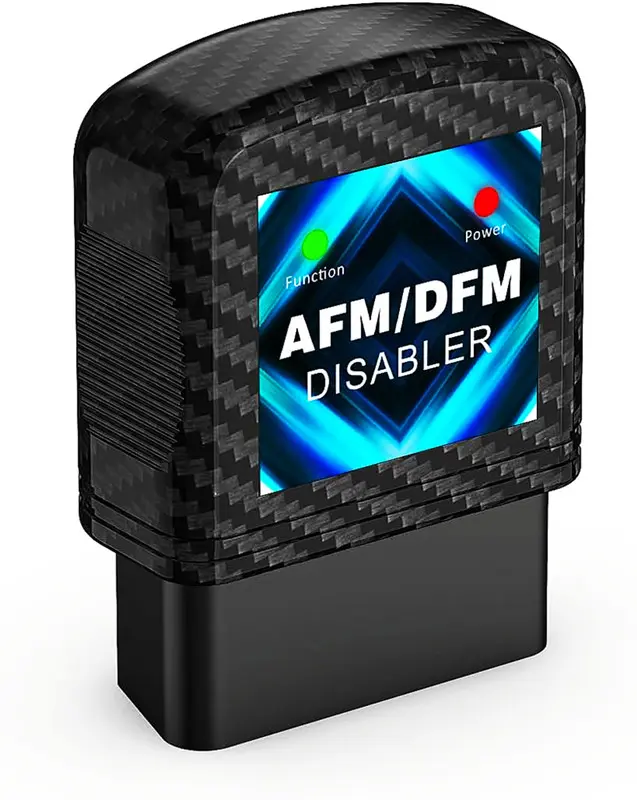
The preventive option
Ropode AFM DFM Disabler — 5.3L Daily Driver Pick
Blocks the ECU from ever commanding four-cylinder mode, so the locking pins described above never move. Preventive only — it will not repair a lifter that has already failed.
Buy on AmazonWe may earn commission from links in this article, at no extra cost to you.
What a Ropode AFM Disabler Actually Changes
A disabler prevents the ECU from ever commanding four-cylinder mode. The lifter oil manifold is never signalled, oil is never sent to collapse the lifters, and the locking pins never disengage.
In other words, the mechanism described above simply does not run. The lifters behave as ordinary solid lifters because they are never asked to do anything else.
That is a coherent preventive argument, and it is why the category exists. What it is not is a guarantee. An engine that has already cycled deactivation for a hundred thousand miles carries whatever wear that has produced, and fitting a module today does not undo it.
It also does nothing for a lifter that has already failed. If you have a tick or a misfire, the repair is mechanical. A disabler fitted afterwards may protect the rebuilt assembly, but it is not a substitute for the repair.
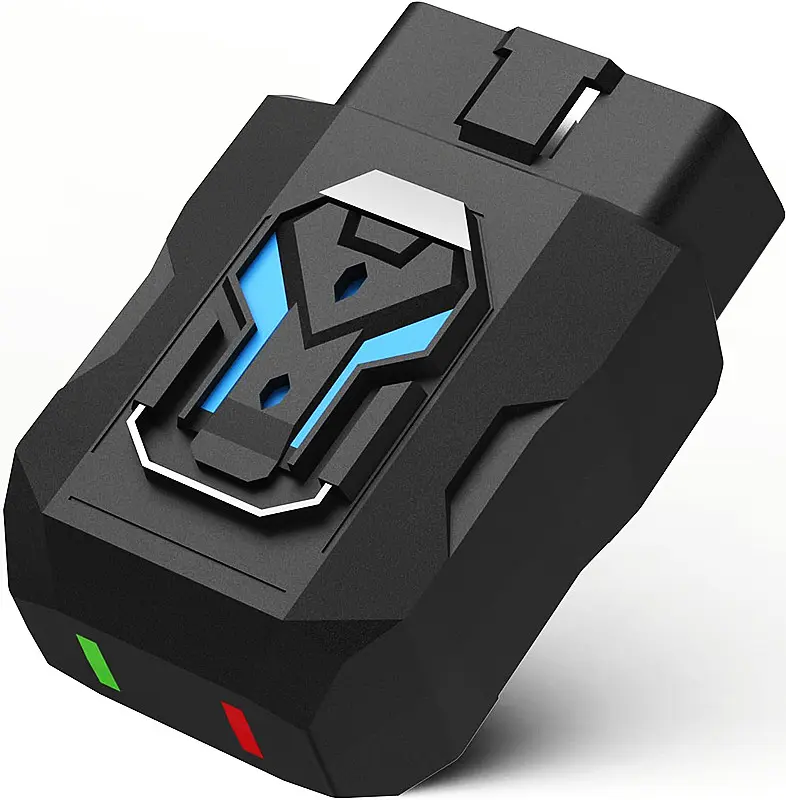
Auto re-arm version
Ropode AFM Disabler — Auto Re-Arm Option
Same preventive logic, but it re-engages on its own at each start. If you are fitting one as insurance rather than a fix, you want it armed every drive without having to remember.
Buy on AmazonThe Alternative: A Full AFM Delete
The permanent mechanical solution is an AFM delete. This replaces the camshaft with a non-AFM design, fits standard lifters throughout, blocks off the lifter oil manifold, and typically includes a tune to stop the ECU expecting a system that is no longer there.
It removes the failure mode entirely rather than preventing it from operating. It is also a substantial job — engine disassembly, parts and labour, running well into four figures.
For most owners the sequence that makes sense is: fit a module now as inexpensive prevention, and if a lifter failure occurs anyway, perform the delete as part of that repair rather than replacing the AFM hardware with more AFM hardware.
Frequently Asked Questions
Does AFM lifter failure happen to every GM V8?
No. Plenty of engines run to very high mileage without trouble. It is a well-documented failure mode rather than an inevitability.
Will a disabler prevent lifter failure?
It prevents the deactivation cycle that is associated with the failure mode. That is a reasonable preventive argument, but no one can promise a specific engine will not fail for other reasons.
Is it too late if my engine already ticks?
For prevention, yes. A tick warrants diagnosis now, because continuing to drive risks turning a lifter repair into a camshaft repair.