What Is an AFM Disabler? The Product Category Explained
What is an AFM disabler? It is a small electronic module which is plugged into your vehicle's OBD-II port. It can prevent the engine computer from switching into four-cylinder mode. After that, the engine can stay on all eight cylinders all the time.
The devices are cheap, take less than a minute to install, and are completely removable and reversible. However, there are many misunderstandings about them. For example, they are sold sometimes as performance parts, sometimes as engine-saving devices. But there are few honest explanations of their limits. In this article, we will introduce the nature of these devices and their true functions.
What an AFM Disabler Physically Is
In fact, it is a plastic housing which is about the size of a matchbox with an OBD-II connector on one end. Some models have indicator lights or small buttons, while others have neither.
There is a simple microcontroller inside which monitors the vehicle's data bus. There is no fan, no heat sink, no display and nothing to maintain. Actually, it draws power directly from the OBD-II port itself, and current draw is very low.
It is usually installed at the diagnostic port under the driver's side dashboard, which is the same connector a repair shop uses for a scan tool.
How an AFM Disabler Works
Before AFM system engages, the ECU should satisfy a full set of conditions at the same time: they are coolant temperature at operating range, light engine load, steady throttle, appropriate speed and gear.
A disabler keeps one of those conditions permanently outside the acceptable range. From the ECU's point of view, the moment to switch to four-cylinder mode never arrives. In fact, it is not fighting the hardware, overriding a command or writing to the calibration. Instead, it simply prevents a decision from being made.
That is why no flashing or cutting is required. You just need to unplug the module and the ECU will return to normal behaviour at once with no trace that the device was ever installed.
What Is an AFM Disabler Not Doing?
It is not adding power, changing fueling, adjusting timing, removing emissions equipment or modifying your ECU calibration. If some sellers describe these modules as performance parts, they are actually overselling them. In fact, the engine already made full power on eight cylinders. The module only changes how often it is on eight cylinders.
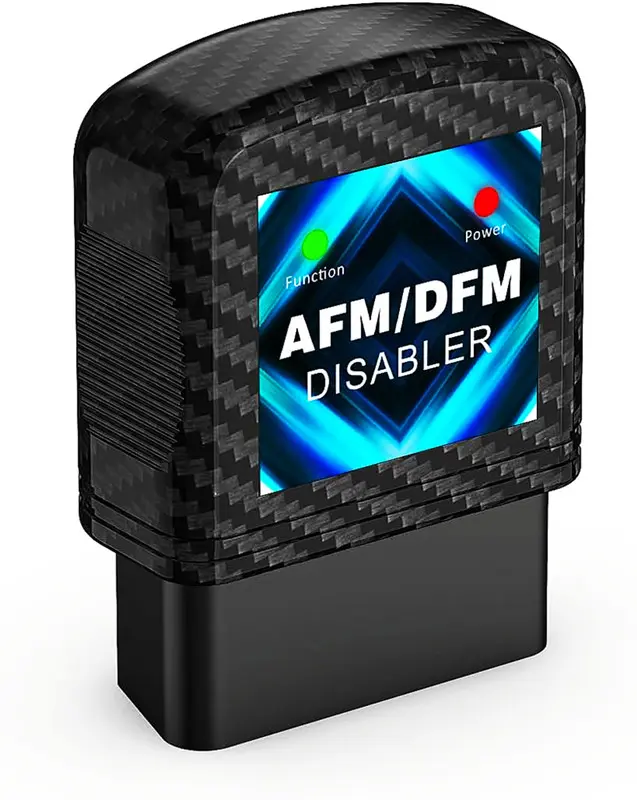
What one looks like in practice
Ropode AFM DFM Disabler — 5.3L Daily Driver Pick
A straightforward plug-and-forget module for 5.3L half-tons. Confirm your model year and engine on the listing before ordering.
Buy on AmazonWe may earn commission from links in this article, at no extra cost to you.
Why Owners Buy One
The main reason is the AFM lifter question. Deactivation relies on lifters that collapse internally with oil pressure. If the locking pins fail to re-seat correctly, wear may accelerate on the lifter and camshaft. Repair costs are extremely high, which can often reach several thousand dollars.
The module can stop the cycling which this failure mode depends on. Although it cannot guarantee your engine will never fail, it removes one variable. Given that the price is equivalent to just a tank of fuel, many car owners consider it as a highly reasonable insurance.
The secondary reason is the driving experience. Owners who have installed aftermarket exhausts often find that the vehicle produces an obvious low-frequency drone at four-cylinder mode. And disabling deactivation can remove the noise.
What It Costs You
Fuel. AFM is designed to save fuel, so disabling it means sacrificing some fuel economy.
Owners commonly report that disabling AFM on the highway results in an increase in fuel consumption of about one to two MPG. But there is much less difference in town driving where deactivation seldom engages, and there is almost no change while towing.
There is also the issue of the port. If you use an insurance telematics dongle or a fleet tracker, the device and the module will compete for the same connector. Although splitters are available on the market, they may cause communication faults on some vehicles.
What an AFM Disabler Cannot Do
This is a point which is overlooked in most product listings. Also, it results in most of the disappointment in the category.
It cannot repair a failed lifter. If your engine already ticks, misfires or idles roughly, that is mechanical damage which needs a mechanical repair. Although you may protect the rebuilt assembly by adding a module afterwards, it cannot reverse existing mechanical damage.
It cannot eliminate wear that has already occurred. If an engine has cycled deactivation for 120,000 miles, the resulting wear is irreversible and existing modules cannot undo it.
It cannot add power or improve fuel economy. Both claims often appear in marketing copy, but neither is true.
Furthermore, it also does not work if the model is incompatible with your engine. For example, if you install an AFM logic module on a 2019-and-newer DFM truck, it might have no effect.
Choosing an AFM Disabler That Works for Your Truck
You should consider two main factors when you make a selection. The first is fitment: you need to confirm the product is suitable for your exact model year and engine. If your vehicle is a 2019 model or newer, you must confirm that it supports the DFM system. Second, it is the question of whether it re-arms automatically at each start or needs a button press. Compared to any other factors among similar products, this point is more likely to cause long-term dissatisfaction, especially for owners who frequently drive short trips.
Disabler, Tune or Delete?
A disabler is the cheapest and only fully reversible choice. For owners whose cars are still under warranty or who plan to resell them, this is a sensible entry-level choice.
A custom tune removes deactivation from the calibration permanently. It never disarms and occupies no port, but it costs several hundred dollars and will leave detectable traces in the ECU.
You should replace the camshaft and lifters, and block the oil manifold to fully delete AFM or DOD. It means you must remove the hardware entirely and costs can reach four figures. Therefore, it is only worth considering when the engine is already apart for a repair.
In all, for most owners, the module is an ideal first step. It is cheap and easy to try out. Also, it is fully reversible if you want to abandon. Furthermore, even if you decide to switch to a permanent solution later, installing this module now will not close off that option.
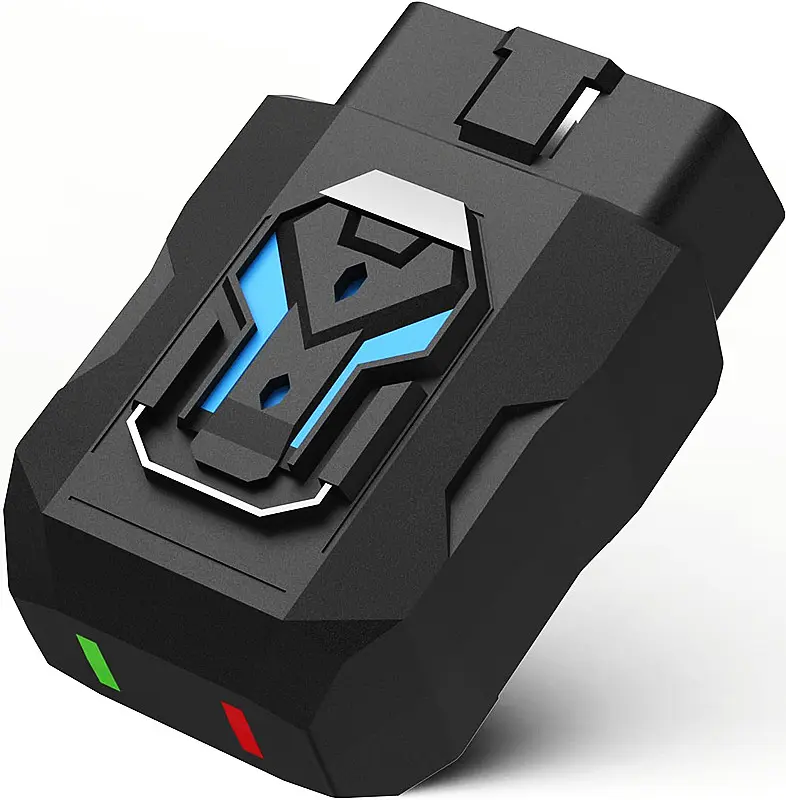
The re-arm feature, built in
Ropode AFM Disabler — Auto Re-Arm Option
Re-engages automatically at every start — the single feature that separates modules owners keep from ones they abandon.
Buy on AmazonHow to Tell Whether Yours Is Working
This is the step most owners skip, and it is why modules end up sitting in the port and doing nothing for months.
You can pair an inexpensive Bluetooth OBD-II reader with a live-data app and find the parameter labelled something like Cylinder Deactivation Mode or AFM Status. When you drive on flat highway at a steady speed, it is more likely to trigger the deactivation.
If the module is not installed, the parameter will alternate between V8 and V4. But with the module installed, it remains locked in V8. in addition, some vehicles also show a fuel mode indicator in the driver information centre. At this time, you can get the information with no equipment at all.
Frequently Asked Questions
Is an AFM disabler safe for my engine?
For an engine designed to operate on all eight cylinders, allowing all eight to run causes no damage, nor is there any plausible mechanism that would lead to such damage. In fact, the module only reads and interferes with a data stream without overwriting your calibration.
Will it void my warranty?
According to the Magnuson-Moss Warranty Act, a manufacturer must prove that the part caused the claimed failure. In fact, a module can be removed before a service visit and leaves nothing behind. That is why it carries a lower risk of warranty disputes than a tune.
Does an AFM disabler work on a 2020 truck?
It is only suitable for models which supports DFM. 2019-and-newer engines use Dynamic Fuel Management, and many modules that support only AFM cannot control them.